Advocacy campaigns
Turn your issue into a decision your local government makes.
Winston Government Relations designs advocacy plans built on LocalGovTracker™ facts: the decision you want, the body that makes it, the date it comes up, and what to do before each meeting.
Plan your advocacy campaignFor nonprofits, coalitions, associations, businesses, and resident groups.
Most advocacy starts too late
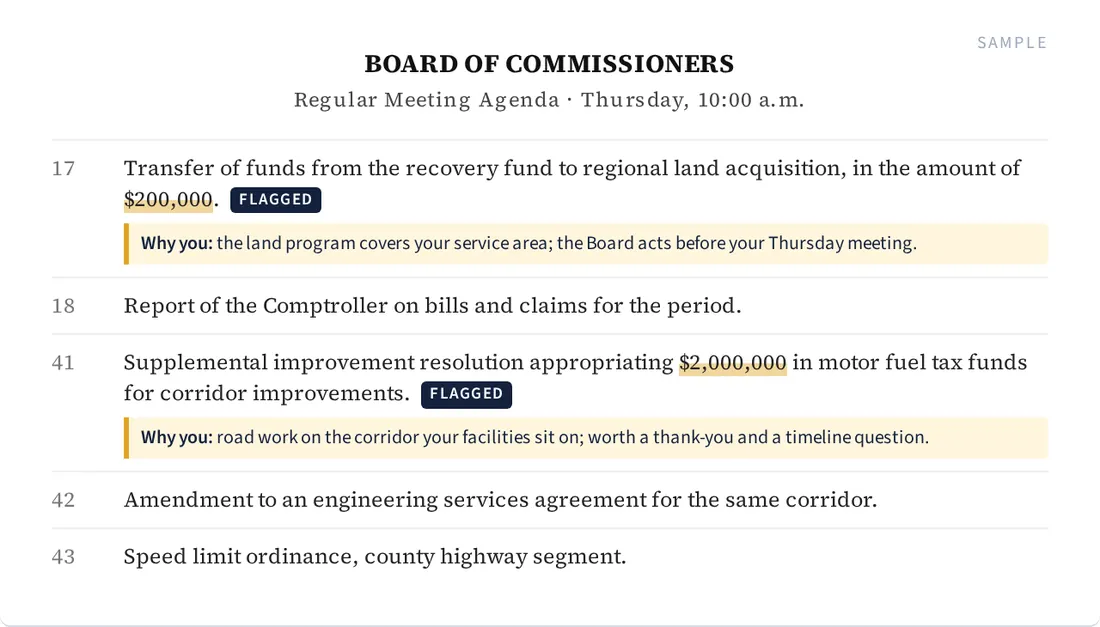
Organizations often show up at the final vote with a strong case and a packed room. By then, the decision has usually been shaped in committee, in the budget, or in a neighboring community.
Decisions are shaped before the vote
Committee referrals, first readings, and budget drafts set the outcome. A plan puts your voice there, while it can still change the result.
Good causes lose on timing
A letter that arrives a week after the agenda is set is a letter no one reads. Every action in your plan is dated to the meeting it is meant to influence.
Your neighbors already answered the question
The county, the next town over, or the school board may have handled the same issue. What they decided is often your most persuasive evidence.
An advocacy plan replaces guesswork with a calendar, a clear ask, and the facts to back it up.
What's in your plan
A short, practical document your team can act on, built from the public record and updated as agendas are posted.
The ask
One specific decision, the body that makes it, and when it is likely to come up. "The county approves funding in the spring budget," not "improve housing."
The decision path
Committee, first reading, and final action, with dates drawn from the agendas we track. You know where you are and what comes next.
What neighboring communities did
How nearby cities, the county, and regional bodies handled the same issue, with links to the source documents.
Who shapes the decision
The committees, offices, and staff that move an item forward, plus likely allies and likely opposition.
Your message
A short, sourced case and a clear request, written so a busy official can understand it in one read.
A calendar tied to meetings
Public comment, testimony, coalition letters, and staff meetings, each scheduled ahead of the agenda item it is meant to influence.
How you will know it is working
Agenda placement, amendments, committee action, and final decisions, tracked as agendas and minutes are posted so you can adjust.
Facts from LocalGovTracker™. Strategy from WGR.
The tracking and the advice work hand in hand, so your strategy always rests on the documented record.
LocalGovTracker™ tracks
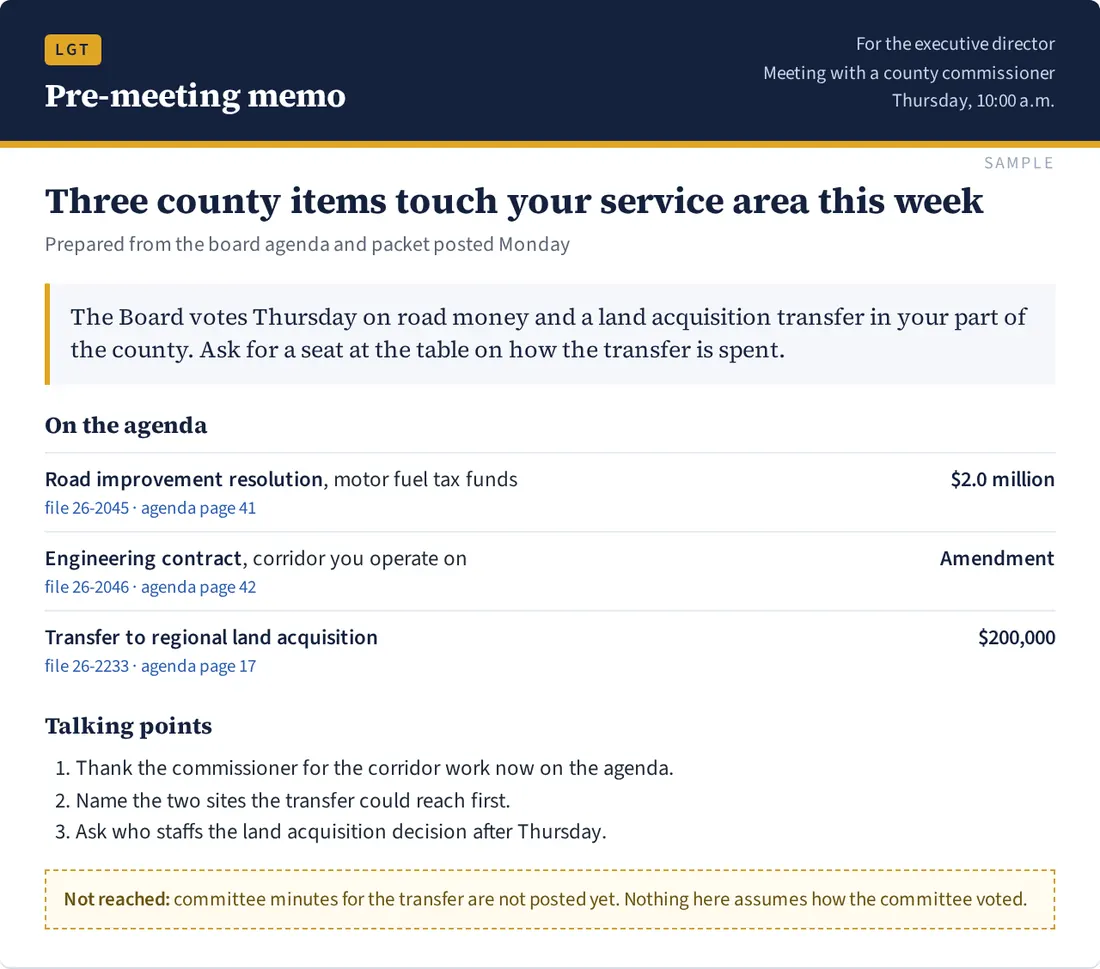
Agendas, minutes, resolutions, and public documents for the bodies involved in your issue, including the neighboring ones. Tracking is automatic, and every fact links to its source.
Winston Government Relations advises
Nearly 20 years of local government experience, including elected service on a municipal board, turned into a plan: what to ask for, when to act, and how to make the case.
Who it's for
Any organization that needs a local government to decide something, change something, or stop something.
Nonprofits and coalitions
Housing, health, safety, environment, and civil rights groups that need their issue on the agenda and moving.
Associations and businesses
Organizations facing a proposed ordinance, permit, zoning change, or budget decision that affects their members or operations.
Resident and neighborhood groups
Neighbors organizing around a development, a road, a school, or a service, who want to be heard at the right time.
How it works
We start with a conversation about your issue and build from there.
Tell us about your issue
What you want decided, where, and by when. We ask what success looks like to you.
We map the decision
The bodies involved, the path an item takes, the likely dates, and what neighboring communities have done.
You receive your advocacy plan
The ask, the message, the people who shape the decision, and a meeting-by-meeting calendar of actions.
We track and adjust
As agendas and minutes are posted, we flag what changed and update your calendar so your team acts at the right moment.
Priced to your campaign
Every plan is scoped to the issue, the bodies involved, and the timeline. Tell us about yours and we will send a clear proposal.
Plan your advocacy campaignRunning for office instead?
Candidates have their own package, with issue briefs, forum prep, and weekly meeting notes through Election Day.
Be in the room before the decision is made.
Tell us about your issue and the government you need to act. We will reply by email with how we would approach it.